
Free resources
Download our FREE booklets for parents and teachers
by completing a short survey.
These booklets are our most popular items and are based on over 25 years of research. Presented in a clear and easy to read format:
- Our Strengths and Difficulties Booklet will help you better understand your child.
- Our Strategies Booklet includes Games and practical suggestions.
Booklets are available for
- Parents / Carers of Primary (5-10 yrs) and Early years children (3-5 yrs).
- Primary school teachers.
- High school teachers & college lecturers.
Free Booklets
Our most popular guides for parents and teachers – complete the short survey to unlock them all.
Understanding the Strengths and Difficulties of Neurodivergent Children: A Guide for Parents
Understanding the Strengths and Difficulties of ADHD: A Guide for Parents
Understanding the Strengths and Difficulties of Dyspraxia/DCD: A Guide for Parents
The EPIC Strategy Booklet: A Guide for Parents of Neurodivergent Children
Understanding the Strengths and Difficulties of Neurodivergent Children: A Guide for Teachers
Understanding the Strengths and Difficulties of ADHD: A Guide for Teachers
Understanding the Strengths and Difficulties of Dyspraxia/DCD: A Guide for Teachers
The EPIC Strategy Booklet: A Guide for Teachers
Understanding the Strengths and Difficulties of Neurodivergent Young People: A Guide for high-school teachers/lecturers

The EPIC Strategy Booklet: A Guide for high-school teachers/college lecturers
Guides & Visual Resources

Communicating with Schools: Phone, Email or In Person
When to use phone, email and in-person communication with your child's school.
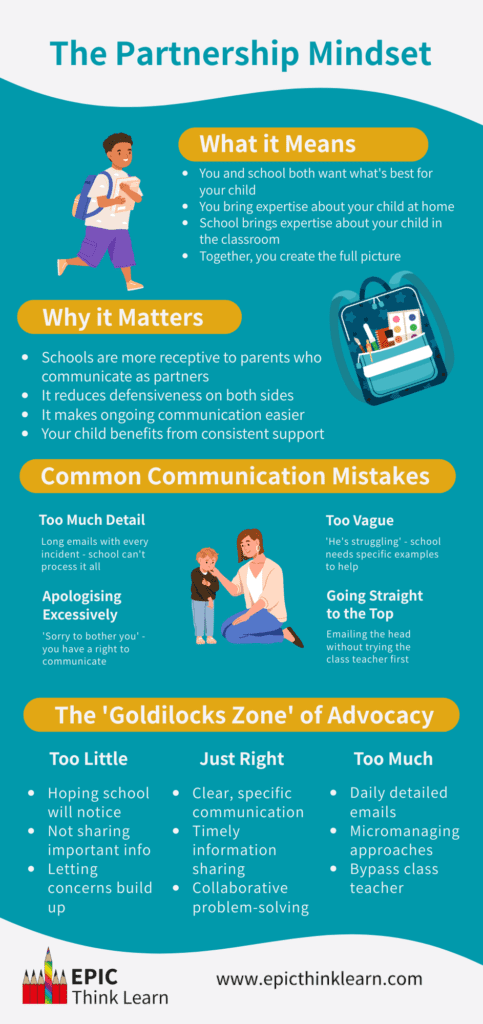
Communicating with Schools: The Partnership Model
The partnership mindset — building a productive working relationship with your child's school.
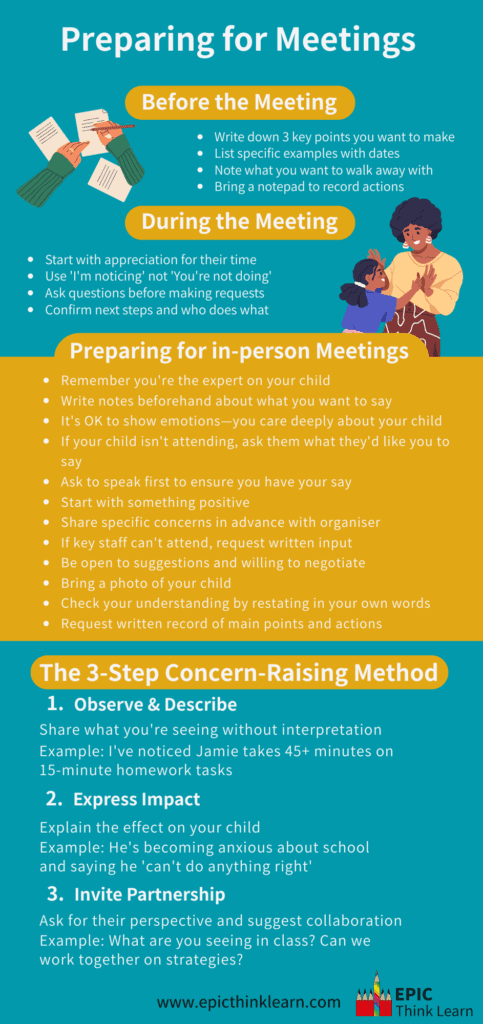
Communicating with Schools: Preparing for Meetings
How to prepare for school meetings so your voice is heard.
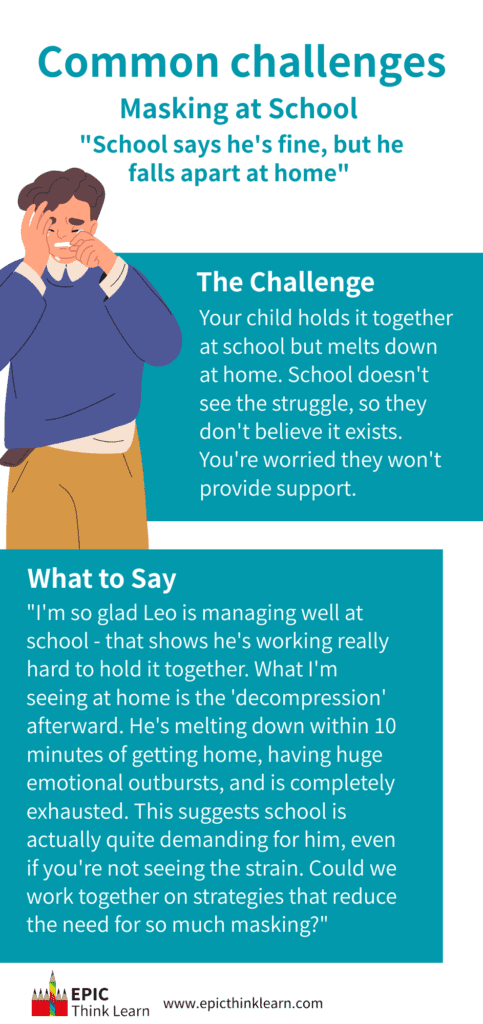
Communicating with Schools: Masking at School
Understanding masking at school and how to talk about it with teachers.
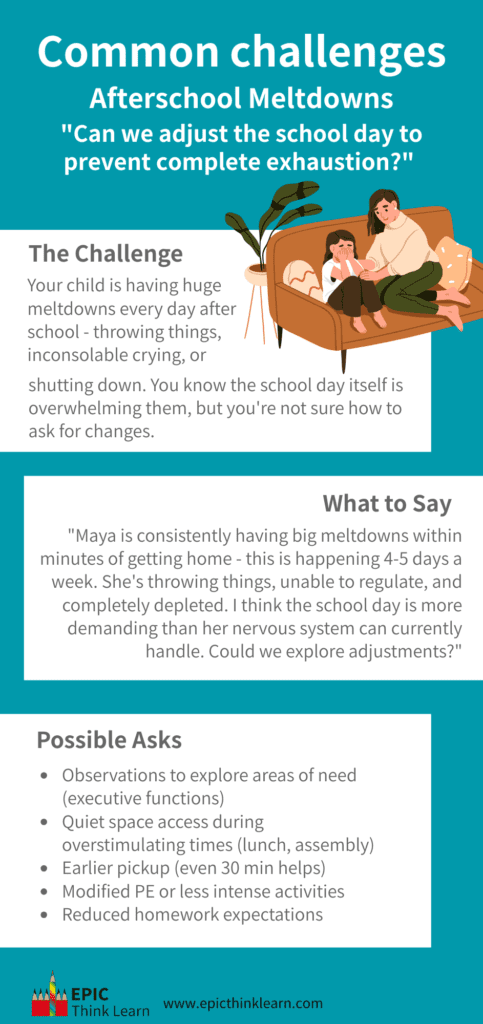
Communicating with Schools: Afterschool Meltdowns
Why afterschool meltdowns happen and how to explain them to school staff.
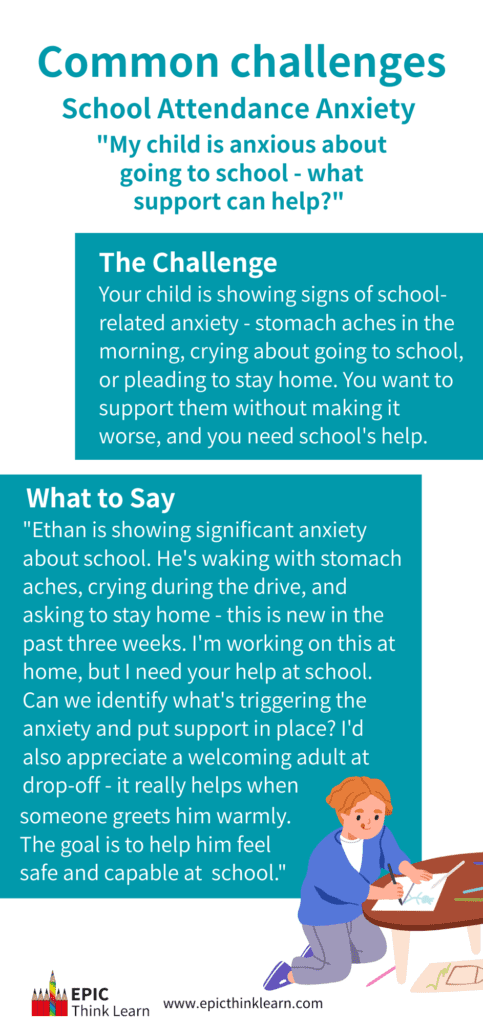
Communicating with Schools: School Attendance Anxiety
Supporting a child experiencing school attendance anxiety.

School Meetings: A Guide for Teens
A guide to help teens take part in their own school meetings. Available in colour and a grayscale print version.
Video Resources

Parent Webinar: Introduction to the EPIC Approach
For Parents — Masking: Recent Research Findings
Research by Ailbhe McKinney & colleagues. Video by Meghan Lumsden.
For Parents — Supporting the Sibling Relationships of Neurodivergent Children

For Parents — Anxiety in Autistic Children
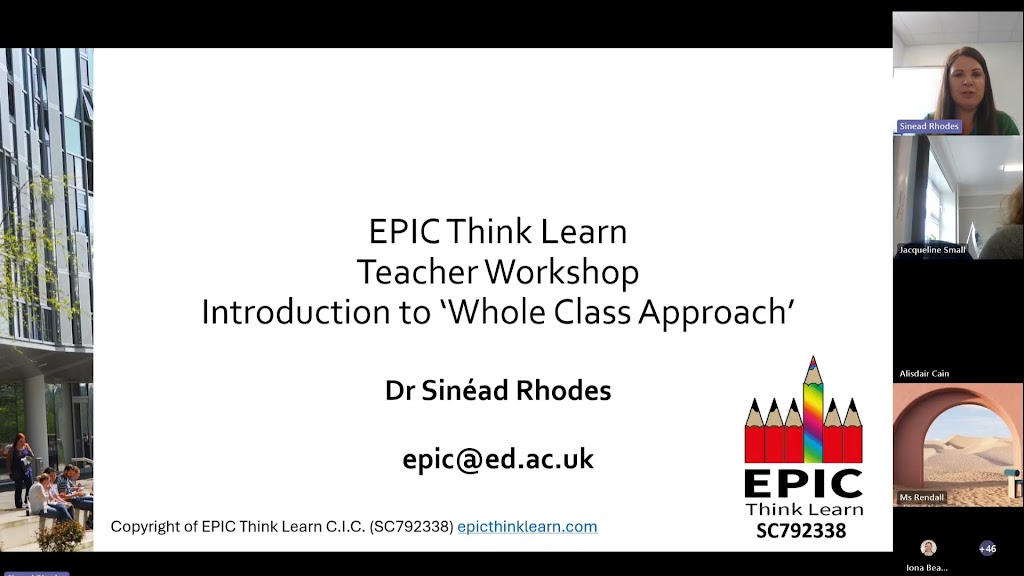
Teacher Webinar: Introduction to Whole Class Approach
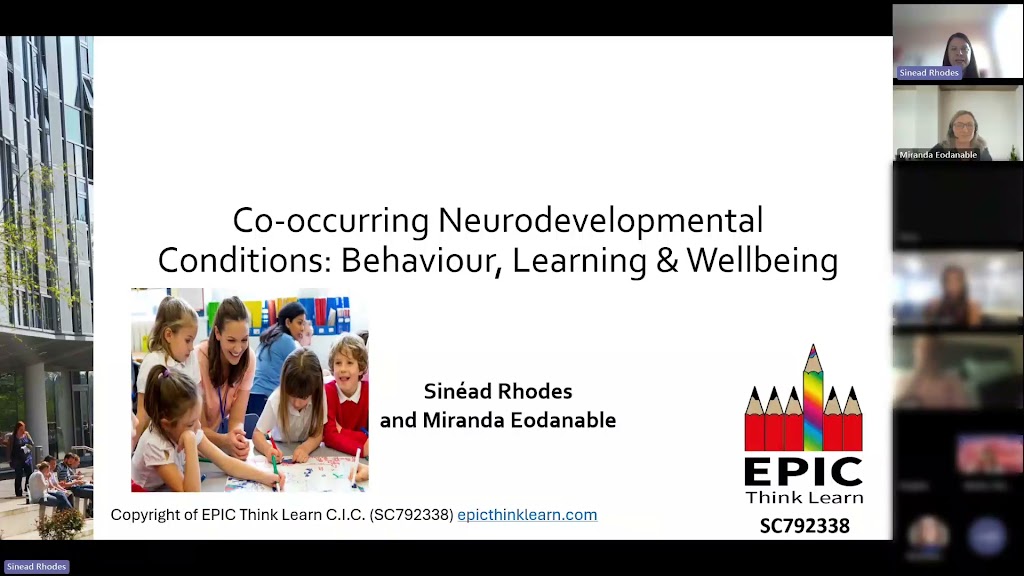
Teacher Webinar: Co-occurring Neurodevelopmental Conditions — Behaviour, Learning & Wellbeing
With a section on FASD (Fetal Alcohol Spectrum Disorder) by Miranda Eodanable, Educational Psychologist.
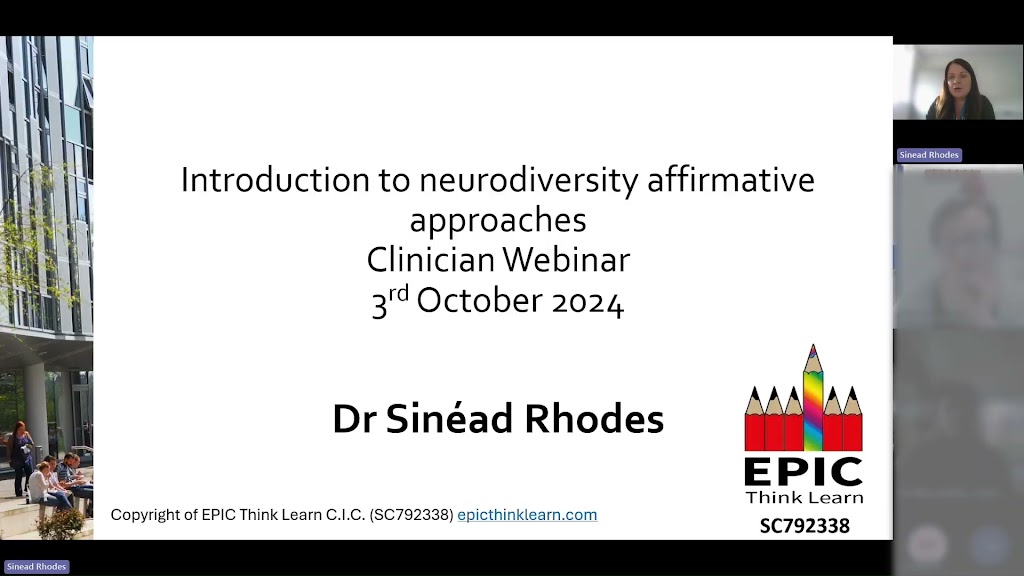
Clinician Webinar: Neurodiversity Affirmative Approaches
Discussing the latest research and what this means in practice.
More Guides & Visual Resources


How Do You Help Your Child with PDA?
PDA = Pathological Demand Avoidance, or some people prefer Persistent Desire for Autonomy. Created by Izzy Adler while on MSc placement.

Understanding PDA: How Can I Help My Child? (2 min 46)
Audio guide. PDA = Pathological Demand Avoidance, or some people prefer Persistent Desire for Autonomy. Created by Lei Lei while on MSc placement.
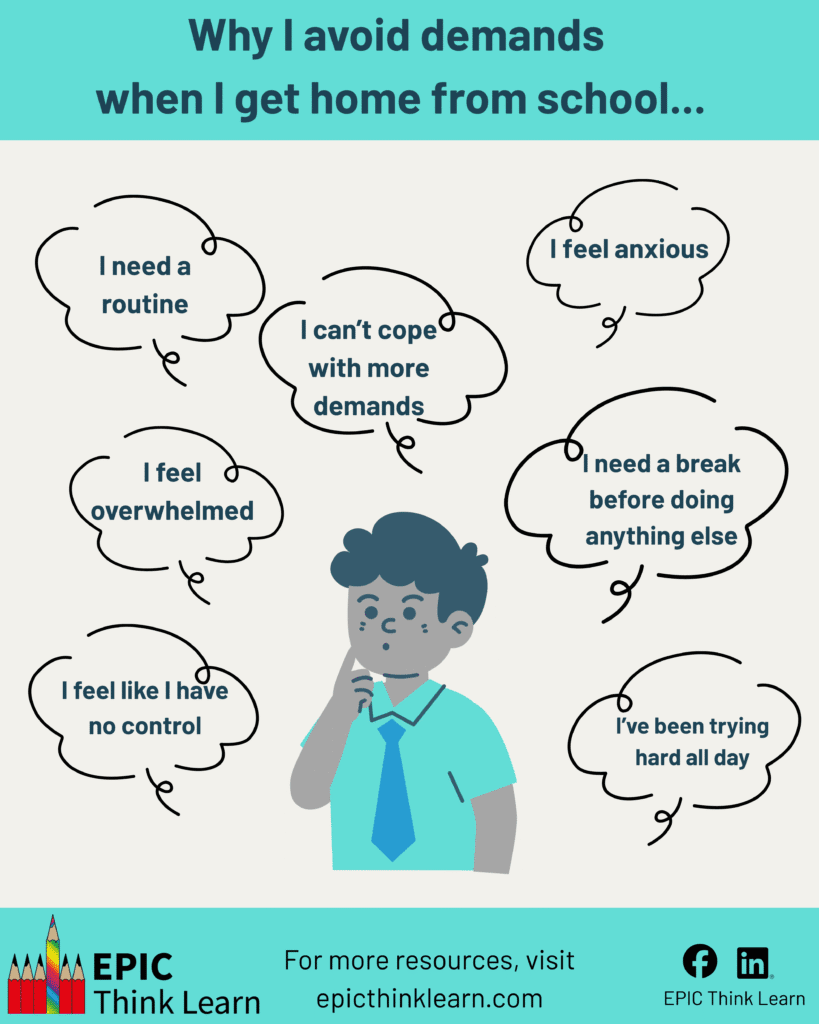
PDA: Supporting Your Child
PDA = Pathological Demand Avoidance, or some people prefer Persistent Desire for Autonomy. Created by Elinor Baker while on MSc placement.

Masking: An Overview of Recent Research
Research by Ailbhe McKinney & colleagues. Infographic by Meghan Lumsden.

Supporting Your Neurodivergent Child with Their First Period

Strengths & Difficulties: A Guide for Teens
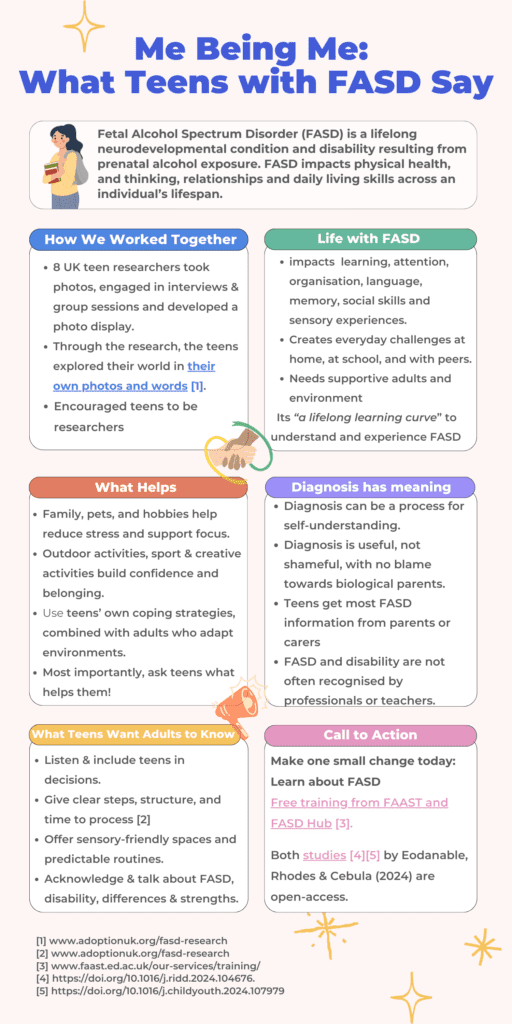
Me Being Me: What Teens with FASD Say
Created by Lei Lei while on MSc placement.